Psoriasis root cause is often deeper than the skin. Psoriasis is an immune-mediated condition driven by systemic inflammation, which means creams and topical treatments may calm the surface without addressing the immune triggers underneath. For many people, hidden food and chemical sensitivities, gut-immune stress, and nervous system activation keep the inflammatory cycle going.
If you have psoriasis that improves for a while and then comes back, it can feel defeating in a very quiet, personal way.
You may wear long sleeves when you do not want to. You may avoid certain lighting, certain photos, certain conversations. You may have a drawer full of creams, ointments, shampoos, prescriptions, supplements, and half-finished products that promised relief but never explained why your skin keeps reacting.
And if you have been told, “It is just psoriasis,” that may have made the experience feel even more isolating.
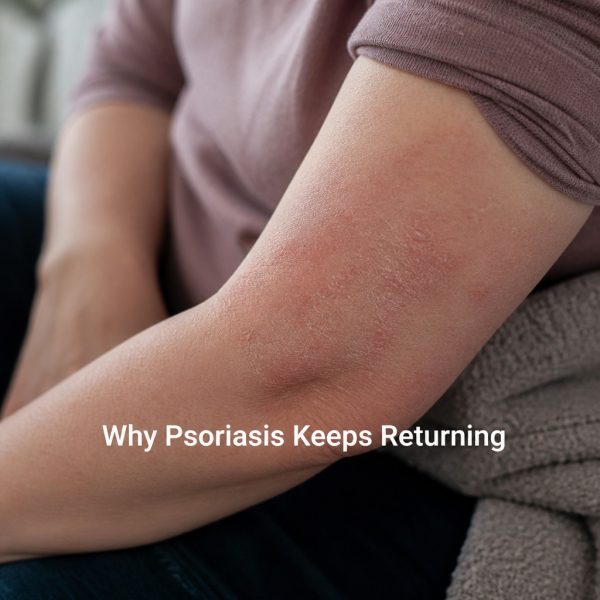
Because when your skin is red, dry, itchy, cracked, flaking, or painful, it does not feel small. It affects how you sleep. How you dress. How confident you feel being touched. How safe you feel in your own body.
Why topical psoriasis treatments often are not enough
Conventional dermatology often focuses on controlling the visible skin reaction. That can be helpful, especially when symptoms are intense. Topicals, medicated shampoos, steroid creams, biologics, and light therapy can all have a place.
But psoriasis is not simply a skin problem.
Psoriasis is immune-mediated. Your immune system is involved. Inflammation is involved. The skin is where you see the signal, but it is not always where the problem began.
That is why psoriasis can seem to “come back” even after you do everything right. The surface may calm down, but the deeper inflammatory drivers may still be active.
In our practice, we often see clients who have already tried:
- Prescription creams that help temporarily but do not prevent flares.
- Anti-inflammatory diets that seem logical but still do not identify their personal triggers.
- Supplements, probiotics, cleanses, or “gut healing” protocols that create inconsistent results.
- Dermatology visits that manage symptoms but leave the root cause unexplored.
This does not mean those efforts failed because you did something wrong. It means the strategy may not have been precise enough.
The psoriasis root cause may be immune activation
One of the biggest misunderstandings about psoriasis is that it is only about the skin barrier.
The skin barrier matters, but the immune system is usually the louder conversation.
When your immune system perceives something as inflammatory, it can release chemical messengers called mediators. These mediators can contribute to symptoms throughout the body, including skin inflammation, joint discomfort, fatigue, headaches, gut issues, and brain fog.
For one person, the trigger might be wheat. For another, it might be salmon, spinach, chicken, garlic, soy, dairy, oats, cinnamon, or a food that looks perfectly “healthy.”
This is why generic elimination diets can be so frustrating. They remove the same common foods for everyone, but immune reactivity is highly individual.
Your psoriasis root cause may not be the food category everyone talks about. It may be the specific foods and chemicals your immune system is reacting to.
Why “eating clean” does not always stop psoriasis flares
Many people with psoriasis are already trying hard.
They may be eating whole foods, avoiding sugar, taking omega-3s, drinking more water, choosing organic produce, and doing everything that seems anti-inflammatory on paper.
But “healthy” does not always mean “safe for your immune system.”
If your immune system is reacting to a food, it does not matter whether that food is nutrient-dense, organic, gluten-free, or praised online. It can still contribute to mediator release and inflammation.
This is where precision matters.
MRT, or Mediator Release Testing, is a blood test that measures how your immune cells respond to a wide range of foods and food chemicals. Instead of guessing, MRT helps identify which foods are more likely to provoke inflammatory mediator release in your body.
Then the LEAP protocol uses those results to create a personalized eating plan that starts with your least-reactive foods and gradually expands in a strategic way.
This is not a generic elimination diet. It is not “cut out gluten and dairy and hope.” It is a structured, individualized protocol based on your immune response.
What conventional dermatology can miss
Dermatology can be important. We are not against symptom relief, and we do not believe anyone should have to suffer through painful skin flares without support.
But conventional dermatology often misses the systemic picture.
If the appointment is focused only on what to apply to the skin, you may never be asked deeper questions like:
- Are there hidden food or chemical triggers driving immune activation?
- Is gut inflammation increasing immune reactivity?
- Is chronic stress keeping the body in a heightened inflammatory state?
- Is the nervous system stuck in protection mode, making it harder for the body to repair?
That last piece matters more than many people realize.
The stress-inflammation connection is real. Chronic stress can influence the HPA axis, gut barrier function, immune signaling, and inflammatory cytokines. The gut and nervous system communicate constantly through the gut-brain axis.
This does not mean psoriasis is “in your head.” It means your body is interconnected.
At MP Integrative Health, our approach begins with precision testing because guessing creates exhaustion. MRT and LEAP help us identify food and chemical triggers with more clarity. But deeper healing may also include nervous system regulation, somatic practices, medical hypnotherapy, inner child healing, trauma repair, and subconscious pattern work when the body is ready for that level of support.
Food can be a powerful first step. Sometimes it is not the only step.
What healing can start to feel like
When the right triggers are removed and the body is given safer inputs, clients often describe a different kind of relief.
Not instant perfection. Not a miracle cure. But a sense that their body is no longer being provoked every day.
Skin may begin to calm. Itching may feel less intense. Digestion may become steadier. Energy may improve. Brain fog may lift. Flares may become less mysterious.
Most importantly, people often stop feeling like their body is broken.
Psoriasis root cause work is about understanding why the immune system is reacting, not blaming the skin for showing the message.
When we can identify what is driving inflammation, we can build a plan that is specific enough to support real change.
FAQ
Can food sensitivities trigger psoriasis?
Yes, food sensitivities can contribute to inflammation in some people with psoriasis. MRT testing helps identify foods and chemicals that may be provoking inflammatory mediator release, which can worsen skin symptoms in immune-sensitive individuals.
Is psoriasis a skin condition or an immune condition?
Psoriasis is an immune-mediated condition that shows up on the skin. The redness, scaling, dryness, and irritation are visible signs of a deeper immune and inflammatory process.
How is MRT different from a regular elimination diet for psoriasis?
MRT is a blood test that measures inflammatory immune reactions to specific foods and food chemicals. The LEAP protocol then uses those results to build a personalized plan, instead of relying on a generic list of foods to avoid.
If your psoriasis keeps coming back despite creams, clean eating, supplements, and your best effort, your body may be asking for a more precise investigation.
We would love to help you understand what may be driving your inflammation from the inside out. The next step is learning how MRT and LEAP can uncover your unique triggers and guide a personalized path forward.